Monday, 2 January 2012

Poori

Pooris are traditional Indian fried breads made with whole wheat flour or unbleached plain flour. Pooris are eaten warm or cold. These are great for picnics or even when travelling. As these are fried in the oil, they will remain fresh up to 3 days. A best option to carry when we have to stay away from home. Pooris can be served with any curry or daal varieties. Even, with spicy powders like Coconut powder, peanut powder.
Poori with potato curry

Ingredients:

2 cups - chapathi flour / Atta
Salt - 1/2 tsp 
Oil for deep frying
Water - 2/3 cup

Method:

Combine the flour and salt in a mixing bowl. Add up to 2/3 cup water, slowly pouring in just enough to form a medium soft, kneadable dough. 
Turn the dough onto a clean surface. Smear your hand with 1 tsp of oil and knead the dough for 5-8 minutes or until smooth. Adding oil at this stage will remove all the sticky dough from your hand. Cover the dough for 10 minutes.

Pre-heat oil in a deep pan over low heat. Meanwhile, divide the dough into 15 to 16 balls and roll each ball into thin disk about 4 1/2 inches wide.Increase the oil temperature.

Lift up a rolled poori and slip in into the hot oil, making sure that it doesn't fold over. It will sink to the bottom, then immediately rise to the surface. Hold it under the surface with a slotted spoon until it puffs up into a balloon.


Let it brown slightly to a golden colour, then turn it over and cook the other side too.

Lift out the poori with the slotted spoon and carefully drain it. Serve with any curry of your choice.

Tips:
 Do not make the dough too soft. This will make the pooris to absorb more oil.
 Do not over cook the pooris as they will turn hard.


Thursday, 29 December 2011

Punjabi Samosa

One of the most popular snack is Punjabi samosa. Easy to prepare at home. As the samosas are huge is size compared to the bhajis, it requires more oil to fry the samosas. So, it is worth to prepare more at a time and freeze the left over samosas and re-heat them in oven as and when required. This samosas have an unique taste because of the mild spices like carom seeds, coriander seeds, fennel seeds and dry pomegranate seeds. Each flavour will compete with the other.

For the wrap:
Plain flour – 500 gms
Carom seeds / Vaamu – 1 tsp
Clarified butter or vegetable fat – 100gms
Salt
Method:
Mix the flour with carom seeds, salt and ghee to form crumbs. Now add water little by little, knead thoroughly and make stiff dough. Cover the dough and leave it for 10 minutes.
For the filling:
Onion – 1 medium chopped into small pieces
Potatoes – 3 large (About 500gms), Boiled and mashed
Boiled green Pea – 3/4th cup
Garam masala – 1 tsp
Cumin seeds – 2 tsp
Coriander seeds – 1 tbsp
Dried pomegranate seeds – 1 tsp
Fennel seeds – 1 tsp
Chili powder – 1 tsp (adjust as per your taste)
Grated ginger – 1 tsp
Oil – 3 tbsp
Method:
Dry roast cumin, coriander, pomegranate and fennel seeds for a minute until they leave a nice aroma.
In a mortar, roughly ground the spices and keep it aside.
Fennel seeds, dry pomegranate seeds and coriander seeds

Heat a large deep pan with oil. When it is hot enough add grated ginger and onion. Fry them until the onion become translucent.
Add mashed potato and boiled peas and stir every thing. Sprinkle salt, chili powder, garam masala and roughly ground spices.
Toss / stir every thing and allow the spices to get infused well into the vegetables. Reduce the flame, close the lid and cook the curry for about 5 minutes. Remove from the flame and allow it to cool down.

Method to make the samosas:
Divide the dough into 12 parts. Smear each ball with oil and roll it into thin disc (like a 2p coin in UK / 1 Rupee coin in India) in to oblong shape.
Cut the disc into 2 pieces, so that they resemble triangles with rounded edges.

Smear the straight edge of the disc with water, hold both the edges and fold them two together so that it forms a cone.

Fill the cone with potato curry tightly.


Seal the edges firmly and slightly bend the sealed edge to one side, so that the samosa can stand.


Prepare 5 – 6 or more samosas at a time


Fry them under low heat. This will allow the samosas to get cooked well inside.

Turn the samosas in between to get fried all around equally.

Remove them and drain them. Keep them separately to avoid sweating. Serve them warm.

Wednesday, 28 December 2011

December Decoration

I can't believe the temperatures in this December. It is 11 Degrees C in London. I found some lovely flowers on the road side..... thought to change their location (my home)


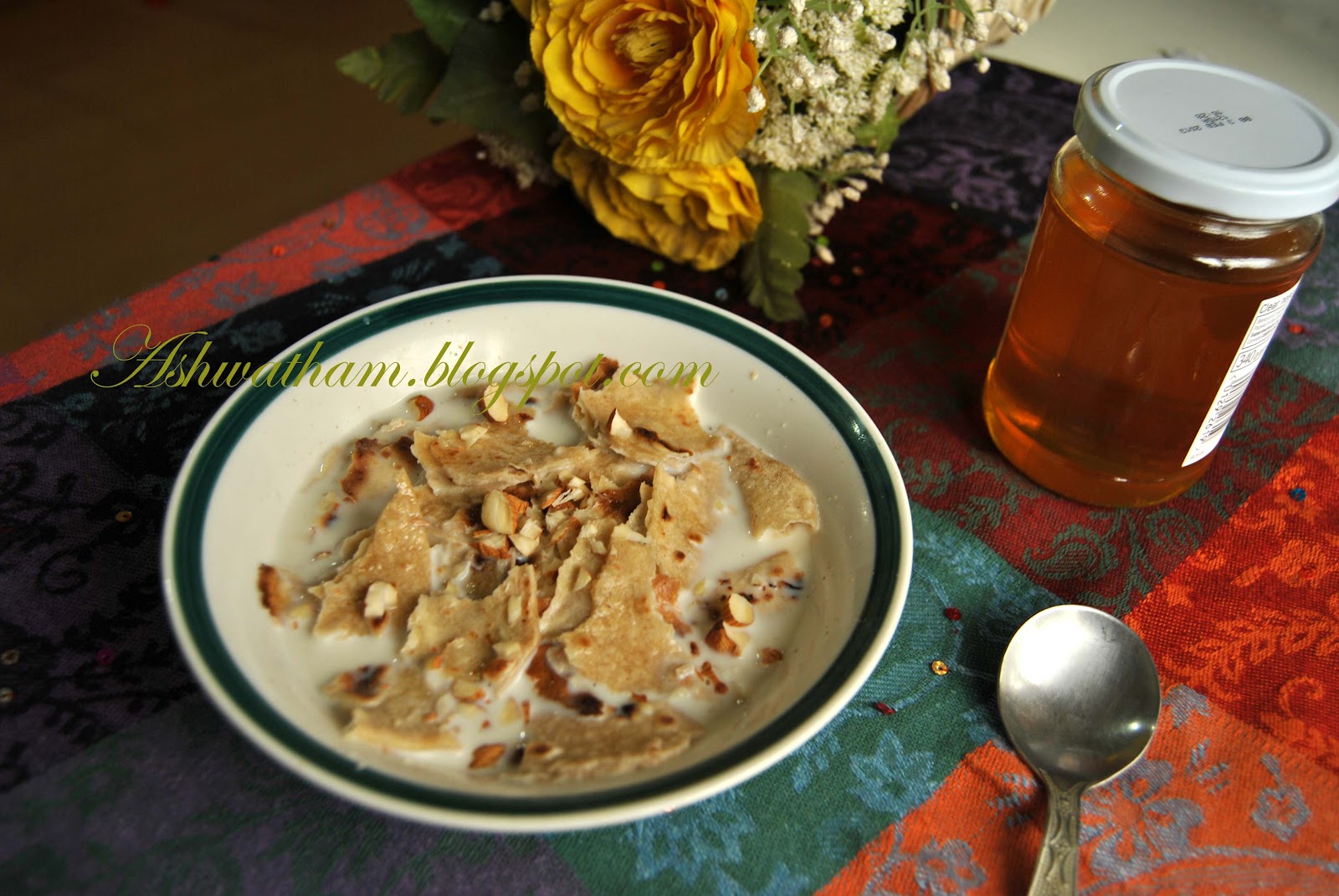
Chapathi / Roti in milk

During the christmas holidays, I was feeling very lazy to prepare the meal in the morning. I was pondering about the ideas to escape from cooking. It just clicked me that I had some chapathis left over from last night meal.

Simplly tear 1 or 2 chapathi / roti into bite size pieces and soak them in warm milk for about 5 to 10 minutes. Just before eating, add some honey and nuts of your choice. Adding honey, dry grapes and nuts will enhance the nutrients. Not only that, they will draw the attention of those fussy eaters as well.


This is a nice substitute for cereals. A healthy breakfast too. Though the ready made cereals are branded as healthy, there are loads of hidden sugars and enormous calories which we ignore them unknowingly.

Wednesday, 21 December 2011

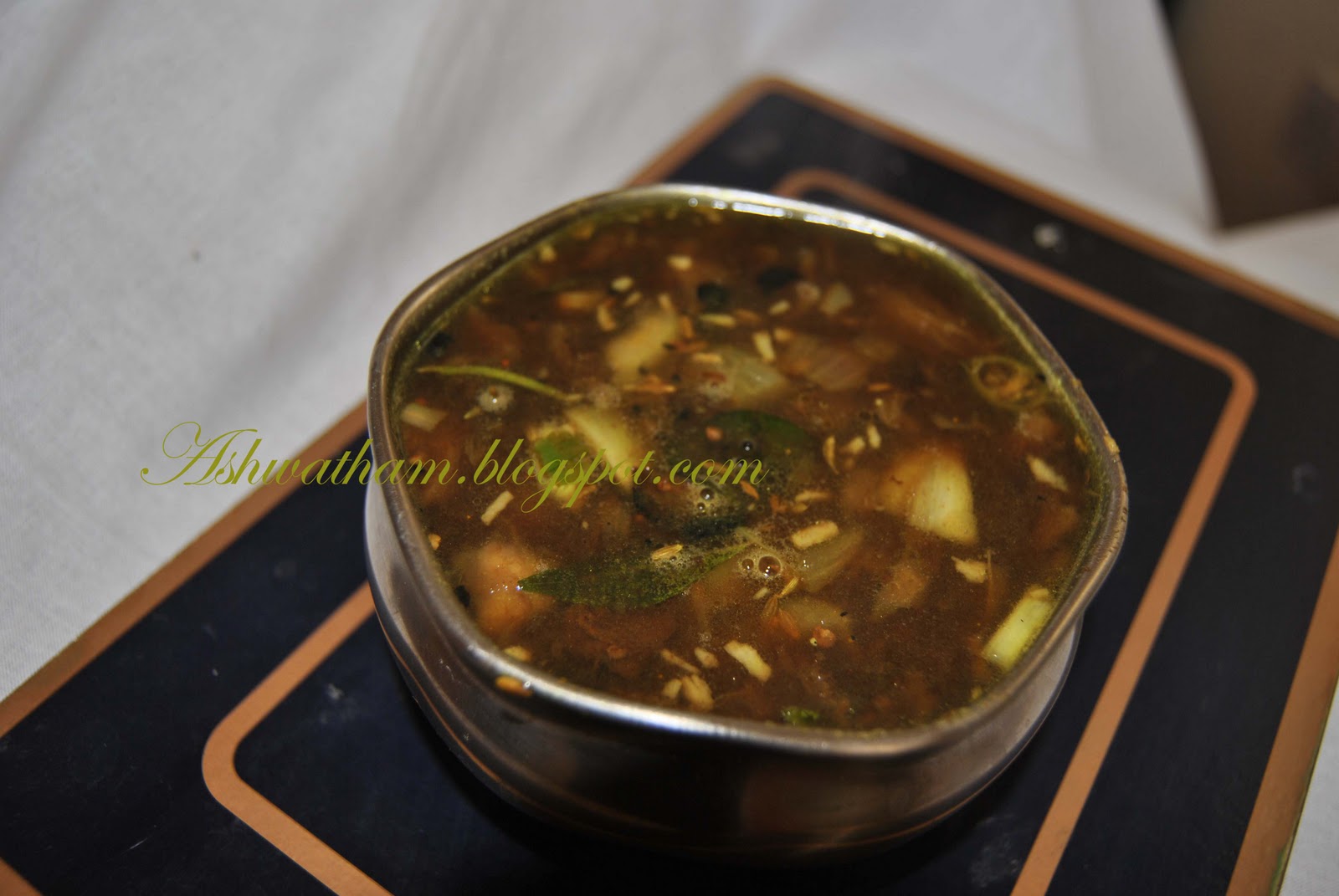
vankaaya Pachipulusu / Roasted Egg plant stew

This is a special variety of rasam / stew prepared especially in Andhra pradesh. Roasted and mashed brinjals are combined with raw tamarind, jaggery, chopped onions, green chillis and seasoned with aromatic spices which intensifies the flavor. This is best served with rice.


Ingredients:

Tender eggplants - 4
Oil – 2 tbsp
Onion - 1 chopped
Green chili - 2
Tamarind - 2 lemon sizes (soak it in hot water and remove the pulp)
Jagerry / sugar - 1 tsp
Salt

For seasoning -
Curry leaves - 2 strings
Mustard + Cumin - 1 tsp
Red chili - 1 or 2
Hing / Asafoetida - 1 pinch
Turmeric - 1 pinch


Method:

Smear the eggplants with oil, then place them on the fire and roast them till they are charred. If you don't have gas stove then you can roast them in a preheated oven.
Remove the eggplants from the fire and allow them to cool a little bit.


Take the pulp into a bowl and mash thoroughly.

Roasted and mashed eggplant

Now to the mashed egg plant add chopped onion, chopped green chili, jaggery / sugar and the tamarind pulp. Add salt and 2 cups of water to this and stir every thing.

For the seasoning, heat a small pan with 1 tbsp of oil. When the oil is hot enough add mustard , cumin and stir for a second. Add curry leaves and the red chili along with hing / asafoetida and turmeric which gives the nice aroma to the stew. Turn off the heat and quickly add the seasoning to the rasam / stew.


Note: Those who can't eat the raw onion, can stirr the chopped onion along with the seasoning, which will reduce the rawness.


Friday, 16 December 2011

Boondhi curry


I have learned this from one of my friend's mom. Boondhi curry is a sort of chewy side dish and acts as a best companion for rice. Nothing is quicker than this curry. I have added a bit of Ginger Garlic paste to give the curry flavour to the recipe.

Boondhi curry

Boondhi – 1 cup
1 large Onion – Chopped
2-3 Green chilli – Chopped
Ginger garlic paste – ½ tsp
Cashew nuts – 10 to 15
Oil
Coriander chopped – 1 tbsp

Plain boondhi, chopped onion, chopped green chili and cashews

Method:
Heat a pan with 2 spoons of oil. When it is hot enough, add the cashew nuts. Roast them slightly and add chopped onion, green chilli and ginger garlic paste.

Fry every thing until the onion turns colour. Add the boondhi , stir every thing and cover it with lid.

Allow the boondhi to absorb all the flavours and get semi soft.


Monday, 12 December 2011

Daal with Drumstick leaves / Munagaaku pappu

No greens area exceptional to prepare daal. Drumstick leaves is one among them which has got lots of nutritional values. Also mentioned by the Scientists as potential life saver. The leaves are high in protein and contain essential amino acids and also Vitamin A and C. So why not add these nutrients to our meal.


Ingredients:
Toor Daal – 1 cup
Drumstick leaves – 1 cup
Tomato – 2 large
Green chili – 6-8 (break them into small pieces)
Onion – 1 chopped
Turmeric
Salt
Tamarind – ½ lemon size. Soak in hot water.

For Seasoning
Oil – 1 tbsp
Garlic pods – 2 to 3
Mustard + Cumin – 1 tsp
Coriander seeds roughly ground– 2 tsp
Curry leaves
Coriander
Red Chili – 1 or 2
Drumstick leaves and Toor daal
Method:
Wash and pressure cook / boil toor daal, drumstick leaves, green chili and tomatoes by adding pinch of turmeric.

When the daal is cooked thoroughly and is soft, add tamarind puree and salt and mash the daal mixture.

Heat a sauce pan with oil and do the seasonings by adding red chili, pounded garlic pods, curry leaves, mustard + cumin and ground coriander seeds.

When the mustard starts spattering, add chopped onions and fry them until they become transparent.

Add the daal mixture to the seasoning and add chopped coriander, close the lid and cook the daal for another 5 minutes on low flame and turn of the heat.

Daal is served with warm rice.