Thursday, 5 May 2011

Palak Panner / Cottage Cheese in Spinach Puree

I have prepared this recipe with very little oil. Instead of blanching the spinach, I have steamed it with little water just to retain all the valuables.


Palak paneer

A vibrant green curry featuring pureed spinach and dairy product with a dash of cumin. This makes a nice combination for any kind of roti variety.

Spinach – 2 large bunches
Paneer – 200 gms
Onion – 1 small chopped into small pieces
Green chilli – 6-8
Ginger + Garlic paste – 1 tsp
Salt
Oil
Cumin powder – 1 tsp

Spinach & green chili puree, Paneer and chopped onion

Method:
Cut the paneer into 1 inch cubes.
Wash, remove the hard bits and roughly chop the spinach. Steam it under medium flame for about 7 – 10 minutes by adding ¼ cup of water. Allow it to cool and grind it along with green chilli. Heat a pan with 1 ½ tbsp of oil. When it is hot add onion and fry until they turn soft. Add ginger+garlic paste and for a moment and then add spinach puree and paneer cubes, cumin powder and salt and allow it to cook for 7-10 minutes on medium flame by stirring in between to avoid from burning. Remove from fire and serve warm with roti.

Tuesday, 3 May 2011

Munagaaku podi / Spicy drumstick leaves powder

This spicy powder gives a vibrant flavor to the palate and nutrition to the body.It is a rare combination of greens with the spices and added nutty taste of the roasted urad daal, which gives the unusual flavour.

The leaves are highly nutritious, being a significant source of beta-carotene, Vitamin C, protein, iron, and potassium. The leaves are used in Siddha medicine. The tree is a good source for calcium and phosphorus.

Moringa leaves and pods are helpful in increasing breast milk in the breastfeeding months. One tablespoon of leaf powder provide 14% of the protein, 40% of the calcium, 23% of the iron and most of the vitamin A needs of a child aged one to three. Six tablespoons of leaf powder will provide nearly all of the woman's daily iron and calcium needs during pregnancy and breastfeeding.

Ingredients:
Munagaaku leaves– 2 cups
Urad daal – ½ cup
Coriander seeds – 2 tbsp
Cumin / Jeera – 1 tbsp
Red Chilli – 8-10
Salt
Tamarind – marble size
Garlic – 3-4 pods

Drumstick leaves, Red chili, Coriander seeds, Urad daal, garlic pods, Cumin and Tamarind

 
Method:
Dry roast all the above ingredients except Munagaaku. Always roast the ingredients individually and under low medium flame. Make sure the leaves are clean and absolutely moisture free. If they are not dry, you can dry them in shade by spreading them on kitchen towels or cotton cloth. Dry roast the leaves separately until they reduced to half the amount and becomes dry.


Roasted leaves and other ingredients

Allow all the ingredients to cool down. Grind every thing coarsely except the roasted leaves. When they are half done, add salt and roasted leaves and grind every thing again into powder.

Munagaku podi

Can be served along with hot rice and ghee or with idlys.

Sunday, 1 May 2011

Pista Kalakanda

The combination of nuts and dairy is intriguing, and the touch of silver leaf gives the elegant look for these sweet balls.


Ingredients:
½ cup – Coarsely grounded Pistachios
½ cup – Sugar
½ cup – Milk powder
½ cup – Paneer (Soft Variety)
Green Food colour – ½ pinch
Butter – 1 tbsp

Method:
Melt the butter in a sauce pan under low heat. Add all the above mentioned ingredients except the food colour and pistachios.

Sugar, Milk powder and Ricotta cheese are added to the melted butter

Slowly mix all the ingredients until it becomes like a soft batter and give a good stir by increasing the flame to medium.


Kalakand mixture

Keep stirring oftenly and when it is nearly done add the food colour and chopped Pistachios and continue stirring until all the moisture gets evaporated and the mixture resembles koya. Reduce the flame and stir for 1 or 2 minutes until the mixture leaves the pan and remove from the fire.

Ready to make balls

Allow it to cool completely and take small amounts of the mixture and make round balls and decorate each ball with cashew and with the touch of silver.

No words to eplain the devine taste

Raagi Sangati / Millet Rice


Sangati with Bullet chilli curry

This is the recipe prepared at almost all house holds in Rayalaseema especially in the villages. This sangati is rich in Iron and easy to digest, as we use Raagi / millet flour in it. This is also the poor man’s most common recipe as it requires less quantity of rice that too of broken variety. There are two reasons for using the broken rice. One, broken rice are cheaper than the whole rice and second, gets cooked quickly than the whole rice. Hence I have also used the broken variety. Another interesting thing is, making the rice balls / Sangati mudha which is an art. In villages they use trimmed coconut branches which resembles the wooden spatulas. These sticks are very strong and they are bit longer than the usual wooden spatulas.

Here are the benefits of Ragi;

- Ragi meal is an Ideal food for diabetes and obese because its digestion is slow and glucose is released from the intestines very slowly into the blood.
- By eating ragi preparations the constant desire to eat will become less and supplies less calories for obese people.
- Due to its rich cellulose it is excellent laxative for constipation.
- Malt is a good food for children and supplies calcium in good proportions for bone growth and body development.
- Its regular use protects from malnutrition, degenerative diseases, premature old age and increases longevity.

Ingredients:
Broken Rice – 1 cup
Raagi Flour – ¼ cup
Salt – ½ tsp

Method:
Wash and soak the rice in 3 cups of water for at least 30 minutes and cook the rice along with salt until it becomes very smooth. Now reduce the flame and add the raagi flour and cover it with cooked rice and close the lid for about 5 minutes.

Raagi flour added to the cooked rice

Now remove the lid and stir the sangati with wooden spatula or a wooden rolling pin and make it smooth without any lumps. Take a portion of sangati into a plate, dip your hand in cold water and  roll the sangati in the form of ball.
I prepare this recipe at least twice a week for my kids as this is very healthy and easily digestible. This can be eaten by 6 months baby to 60 years old person. We normally add a dollop of ghee to this raagi sangati and feed the babies. Adults or grown up children will eat with any gravies made up of vegetables or meat.
You know what, I love to eat with yogurt as well. Yummy..yummy

Sangati mudha with bullet chili gravy


Saturday, 23 April 2011

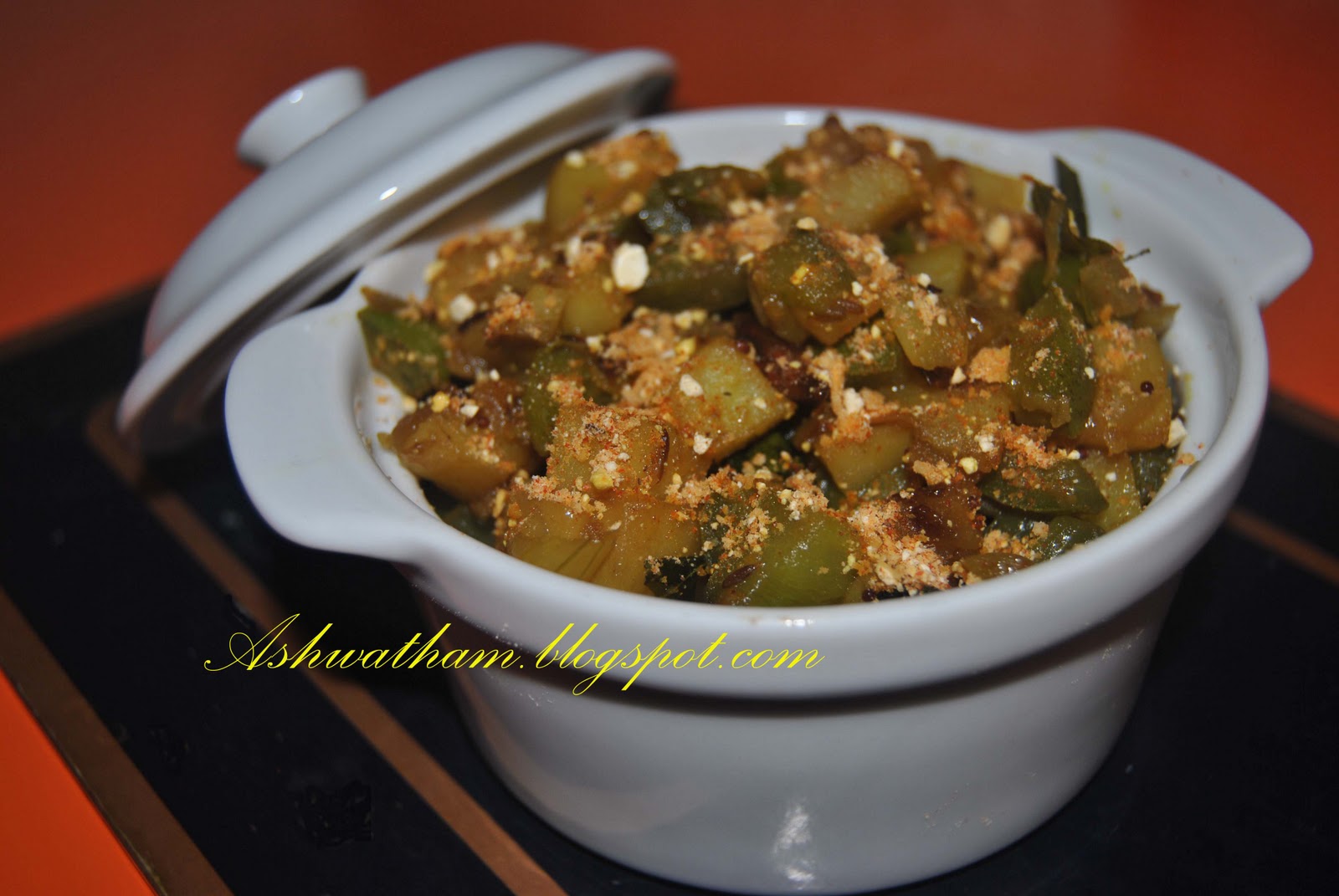
Potato Capsicum fry

This is another spicy side dish which can be served along with rice or roti. Unlike the other fries, this will take less time as we boil/steam the potatoes (time management) before frying them.
Potato and capsicum fry

Ingredients:
Capsicum 1 – Large diced into small cubes
Potato – 3 – Medium diced into small cubes
Onion – 2 chopped into small pieces
Turmeric – 2 pinches
Coriander chopped – 1 tbsp
Mustard + Cumin – 1 tsp

For Spicy Powder
Roasted Chick pea – 2 tbsp
Grated dry coconut – 2 tbsp
Chili powder – 1 tsp
Garlic pods – 2-3
Salt
Grind them all together into coarse powder.

Method:

Steam potato cubes until they are half boiled. You can also microwave them without adding any water for 3-4 minutes by stirring in between. Heat a pan with oil. When it is hot enough add mustard + Cumin and then onion and fry for a minute. Add the steamed potato and capsicum along with some salt and turmeric. Bear in mind to add little bit salt as we are going to add the spicy powder as well which has also got some salt. Fry them on medium flame until they are done. Sprinkle some coriander and the spicy powder and toss every thing and cover the pan with lid for a minute or so until all the flavours are incorporated. Remove from the fire. Can be served with rice or roti.

Piping hot potato capsicum fry

Wednesday, 20 April 2011

Coriander Chutney - 2


 Coriander Chutney
Ingredients:
Urad Dal - 4 tsp
Chana Dal - 3 tsp
Red Chillies - 3
Green Chilli - 1
Peanuts - 1 tbsp
Coconut - 1 tbsp
Hing - a pinch
Salt
Coriander Leaves/Cilantro - 1 small bunch
Oil - 3 tsp
Tamarind - a small piece

Method:
Heat oil in a pan and add peanuts, urad dal, chana dal, red chillies, and fry till they turn brown. Keep them away.
In the same pan add coriander,green chilli, coconut,tamarind and hing and fry until the coriander becomes soft.

Cool and grind to a coarse paste by adding no more than 1 or 2 tsp water.
Mix with piping hot rice and ghee or you can even spread this on top of the toast.


Coriander Chutney on top of toast

Sunday, 17 April 2011

Sajja / Bajra / Pearl Millet dosa


Among Millets Baira is the predominant crop in India. It is also called as Pearl Millet in Western Countries, it is a wholesome grain which has high nutritive value. It is usually very popular in the States of Maharashtra and Rajasthan in India. Generally people eat in winter season. It has the same quantity of protein as wheat. Bajra is rich in Iron, B vitamins, Thiamine, Riboflavin and niacin.

You can find more details in here http://en.wikipedia.org/wiki/Pearl_millet

Ingredients:

Bajra / Pearl millet / Sajjalu – 3 cups
Rice – 1 cup
Urad daal / Black gram – 1 cup
Fenugreek seeds – 1 tsp

                                                                                      Pearl millet
Method:

Soak all the above ingredients together for atleast 6 hours. Grind them all together as normal dosa batter and allow it to ferment for at least 8 hours.

Just before making dosa, stir the batter thoroughly by adding salt, and swirl the batter on the hot pan and drizzle some oil if necessary. Turn dosa on to the other side as well and cook for few seconds.

Serve them hot with any chutney.
Sajja Dosa with Peanut chutney and Roasted chickpea powder