Sunday, 13 January 2013

Sankranthi - 2013


Makara Sankranthi is also known as Sankranthi, is one of the highly auspicious days in a Hindu calendar and the day is dedicated to the worship of Lord Surya. The Tamil year begins from this date. This festival is known as “Thai Pongal” by Tamilians. This is also celebrated as Uttarayan in Gujarat. On the same day people will celebrate Makaravilakku festival in Sabarimalai in Kerala. 

Makara Sankranthi is the day when the sun enters into the zodiac Capricorn or Makara. It is also known as Uttarayana Punyakalam and heralds the arrival of spring season.

The Bhogi is often referred as Lord Indra, the Vedic God of thunder and rain. It is also widely believed that Bhogi Pongal is the Indra Vizha festival observed during the Chola period.

Sankranthi is a festive time to have good food and indulge. This is the most auspicious harvest festival which is celebrated for 3 days in Andhra as Bhogi, Sankranthi and Kanuma. It is equally fun for all 3 days. 


Festive mood starts the day before the Bhogi by accumulating the unwanted things in the house., eg., Mats, broom sticks, wooden benches etc., On the first day all the members of the family, including the neighbourhood will gather early in the morning and set bonfire at the centre and burn the things that are of no use. A sort of cleansing ceremony…….

Next comes the Sankranthi, the main festival and the most important day and is also known as  Pongal. In Andhra Pradesh on the Sankranthi day, ‘Pongali’, a dish prepared from the recent rice harvest is offered to Sankranthi Lakshmi.

Kanuma is observed on the third day of the Sankranthi. It is believed that Lord Krishna lifted the Govardhan hill to protect the people of Gokulam on this day. Mukkanuma is observed the day after Kanuma and is primarily a day of feasting and merry making.

Kanuma festival is quite similar to the Mattu Pongal observed in Tamil Nadu. The festival is dedicated to cows, bulls and other animals that are part of agrarian economy. Cattle and cattle sheds are cleaned on the day. Cows are decorated with marigold flowers and are worshipped.

Gangireddu and Hari daasu are the two important aspects of Sankranthi. Those days are gone where the cows and bulls are decorated with colourful clothes and flowers and hari daasu makes them to dance and play as per his orders. It was great fun to watch those interesting plays where the bull obeys his master's orders.
Missing all those fun now......

I am really lucky to capture this picture during my visit to India. 


Saturday, 12 January 2013

Poornam Boorelu / Sweet fritters


Poornam boorelu is a delicious treat with a golden hue, with crunchy outer texture and softer inside. A must have sweet for the South Indian festivals.


Ingredients for the batter
1/2 cup black gram /urad dal
1 cup rice
salt to taste

Ingredients for the Poornam
Channa dal/sengapappu – 1 cup
Grated jaggery – 1 cup(adjust according to your choice)
Fresh coconut pieces (optional) - 1/4 cup
Cardamom powder - 3/4th  tsp
Oil for deep frying


Method:
Wash and soak the rice and urad daal for 2 hours.

In the mean time cook chana daal with 2 cups of water. The daal should be just cooked and hold shape. Drain any left over water from the dal after its cooked. 


Continue cooking the chana daal by adding jaggery.


Once the water gets evaporated completely and it appears like a thick mixture,  use a masher to mash them together till it blends well. Allow it to cool down.


Add the chopped coconut pieces, cardamom powder and mix well. Shape small bite sized balls

Now prepare the batter by draining the water from Urad daal and rice and grind to fine paste adding very little water. It should be like a thick dosa batter. To test the thickness, dip a spoon and when we lift it, the spoon should be coated well with the batter. Add a pinch of salt and mix well. Leave aside covered.

Heat enough oil in a wide heavy bottomed vessel for deep frying the balls. Dip each ball in the batter and let it coat evenly and place in the oil and deep fry till golden brown under medium flame.
Serve warm with a stream of ghee…


.hmmm…. yummy for my tummy…my little one said…


Saturday, 5 January 2013

Capsicum salsa

This recipe is busting with flavours. The red pepper adds heat, garlic adds the unique flavour and the ginger and lime juice creates freshness. A nice companion for nachos....

Ingredients:

Red Pepper - 1 large
Tomato - 1-2
Lemon juice - 2 -3 tbsp
Salt
Ginger - 2 inches
Garlic - 1-2 cloves


Just blend them all coarsely

Enjoy....


Friday, 14 December 2012

Senagapappu vada / Chana daal vada

Usually the vada process is bit lengthy, but this chanadaal vada is bit quick as we just need to soak the daal for just 1 hour and the texture is not sticky when compared to urad daal, so it is easy to blend it. The flavour is irresistible.


Ingredients:
Chana daal - 1 cup
Salt
Ginger & Green Chilli paste - 1 tbsp
Onion - 1 chopped into small pieces
Chopped Coriander leaves - 1 tbsp

Method:
Soak the chana dal for not more than 80 minutes. Drain and blend coarsely.


Transfer the mixture into a bowl, add the green chillies, ginger, onion, coriander and salt and mix well.

Divide the mixture into equal portions and shape each portion into 1/2" thick small round flat balls.
Heat the oil in a kadhai and deep fry them till crisp and golden colour.

Serve hot with chutney


Sunday, 9 December 2012

Daalcha

This is a vegetarian version of Daalcha which brings a completely new scrumptious flavour in lentils. Lentils are cooked along with egg plant and tomato and sauted in cashew nuts masala. You can substitute vegetables with meet as well.

Daalcha
I learned this recipe from my sister-in-law during my last visit to India.

Ingredients:

Toor daal – 1 cup
Brinjal / egg plant – small variety – 4
Milk – ¼ cup
Cashew nuts – 4-5
Tomato – 2
Onion – 2 (Cut 1 into chunks and 1 into thin slices)
Ginger garlic paste – 1 tsp
Coriander powder – 1 tsp
Chilli powder – 2 tsp
Green chilli – 3 slit length wise
Garam masala – ½ tsp
Tamarind – ½ lemon size

Method:

Wash and soak toor daal in 2 cups of water
Cut 1 tomato and egg plants into large chunks and add to the daal.
Add ¼ tsp of turmeric and boil them till soft.

Daal, Egg plant and tomato


Heat a pan. Add milk, cashews, onion and tomato chunks and cook until the milk gets evaporated.


Grind everything into smooth paste.

Heat apan, add 2 tbsp of oil. Add thinly sliced onion, green chilli and ginger garlic paste. Fry
everything. Add coriander powder, chilli powder and garam masala. To this add the ground paste
and cook for 5 minutes.


Add the mixture to the cooked daal. Add tamarind water and bring it to boil.


A nice companion for pilau rice.


Wednesday, 5 December 2012

Glades

A nice and warm peach coloured glades occupied a cosy corner in my hall...


Saturday, 1 December 2012

Pav Bhaji


The most simple recipe to make the full meals with packed nutrients. A famous North Indian street food which tickles our taste buds with the mouth watering ingredients.


For the Pav
12 pieces of Pav bread

For the Bhaji
Ingredients:
Mixed vegetables (Potato. Cauliflower, Green pea, Carrot, capsicum etc) chopped – 4 – 5 cups
Onion – 1 large, chopped into small pieces
Tomatoes – 3 large chopped
Kaala namak (black salt) – ½ tsp
Pav Bhaji masala – 1 tbsp
Chilli powder – 1 tsp
Ginger garlic paste – 1 tsp
Salt
Butter – 2 tbsp
Oil – 2 tbsp

Method:

Boil all the vegetables till they are soft. Drain out and preserve the excess water.
Heat the oil in a large pan, add the onion and sauté for 2 minutes. Then, add the ginger-garlic paste and sauté till the onion softens.
Add the tomatoes and simmer till the oil separates.


Add the chilli powder, pav bhaji masala, black salt and salt and cook for 2 to 3 minutes.
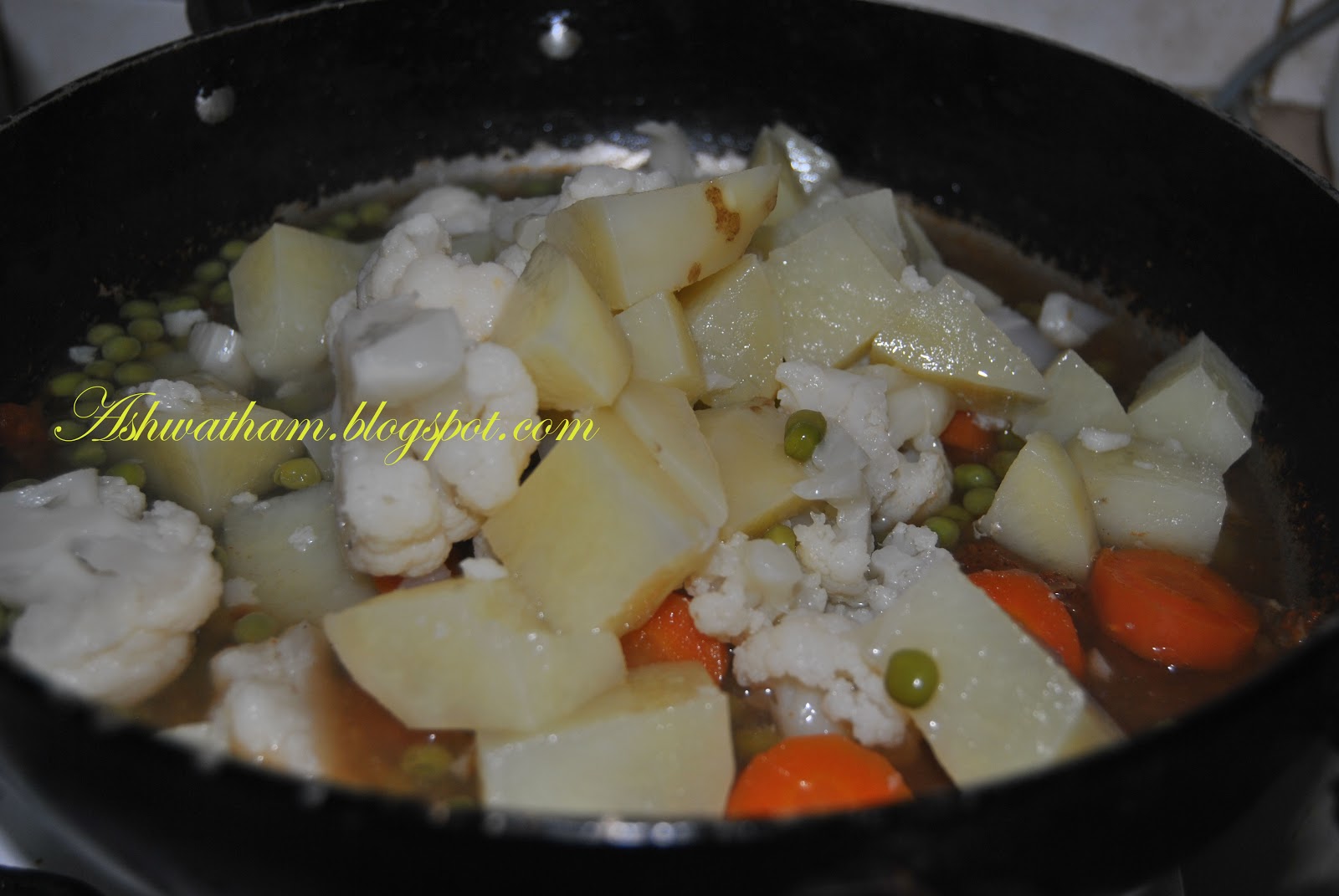
Add the boiled vegetables


Mash them thoroughly using a masher and add ½ cup of water or the preserved vegetable stock and cook until the moisture is well absorbed.


For the pav


Slice each pav, apply a little butter to each side.
Heat a large tava and cook the pav on both sides till the pieces are lightly browned.


Serve the hot bhaji on individual plates and top with the onion and coriander.
Serve with the hot pav and lemon wedges.


Tip:
You can sprinkle the pav bhaji masala or any chat masala on top of the bread and then fry them till crisp. This  intensifies the flavour.